
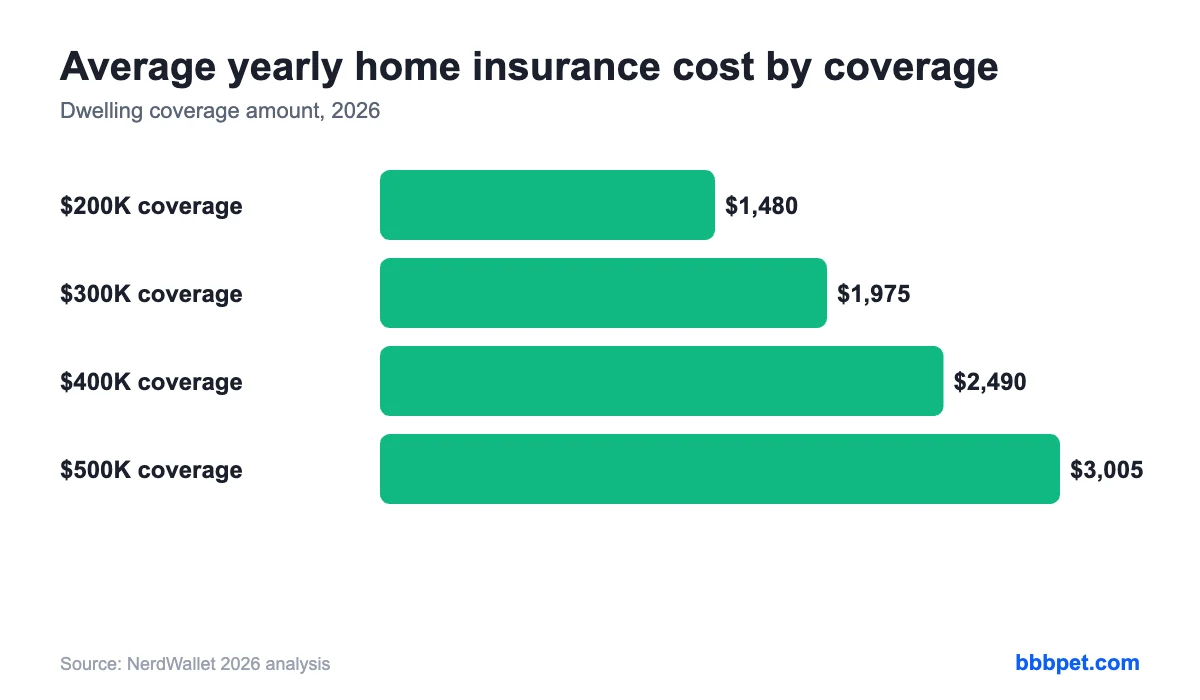
Quick answer: Homeowners insurance costs about $2,490 a year ($208 a month) for $400,000 of dwelling coverage, according to NerdWallet’s 2026 analysis of more than 100 insurers. Other studies put the national average closer to $3,000 — Insurify’s mid-2026 figure is $3,012 — because each uses a different sample home. Where you live matters most: Florida averages roughly $8,500 a year.
- Most homeowners pay between about $1,500 and $3,500 a year, but storm-prone states pay far more.
- Your dwelling coverage amount, deductible, credit and claims history drive your price.
- Comparing 3+ quotes and bundling with auto are the fastest ways to save.
- Raising your deductible lowers your premium — but only do it if you have the cash to cover it.
Average homeowners insurance cost by coverage amount
| Dwelling coverage | Average yearly cost | Average monthly cost |
|---|---|---|
| $200,000 | $1,480 | $123 |
| $300,000 | $1,975 | $165 |
| $400,000 | $2,490 | $208 |
| $500,000 | $3,005 | $250 |
Source: NerdWallet 2026 rate analysis. Your quote will differ.
Why national averages differ so much
You’ll see “average” home insurance costs from $2,100 to over $3,500 depending on the source. That’s because each study prices a different sample home — different dwelling coverage, deductible, home age and location. Use averages as a rough guide, then rely on real quotes for your address.
What affects your homeowners insurance premium
Location and weather risk
Hurricanes, hail, wildfire and tornadoes push premiums up. Florida, Louisiana, Oklahoma and Texas are among the costliest states, while states with milder weather such as Vermont, Hawaii and Maine tend to be cheapest. Even ZIP codes in the same city can differ.
Rebuild cost (dwelling coverage)
Your policy should cover the cost to rebuild your home, not its market value. Higher construction costs mean higher coverage and higher premiums.
Deductible
Moving from a $1,000 to a $2,500 deductible usually lowers your premium. In many coastal states, separate hurricane or wind deductibles are a percentage of your dwelling coverage (often 2%–5%).
Credit-based insurance score
In most states, insurers use credit history to set rates, and homeowners with poor credit can pay more than double what those with excellent credit pay. Some states, such as California and Massachusetts, restrict this practice.
Claims history, home age and roof
Recent claims on you or the property raise rates. Older homes, outdated wiring or plumbing, and older roofs also cost more to insure — some insurers won’t cover roofs past a certain age.
9 ways to lower your homeowners insurance
- Compare at least three quotes every year or two. Prices for the same home can vary by well over $1,000 between companies.
- Bundle home and auto. Multi-policy discounts are among the largest available.
- Raise your deductible — if you have savings to cover it.
- Improve your credit where credit-based pricing is allowed.
- Install protective devices: monitored alarms, smart water-leak sensors, deadbolts and smoke detectors often earn discounts.
- Upgrade your roof. Impact-resistant shingles or a newer roof can cut premiums, especially in hail and hurricane zones.
- Ask about wind mitigation credits (hurricane straps, shutters) if you live on the coast.
- Avoid small claims. Paying minor repairs yourself protects your claims-free discount.
- Review your coverage annually. Remove coverage you don’t need, but never underinsure the rebuild cost.
What homeowners insurance covers (and doesn’t)
| Usually covered | Usually not covered |
|---|---|
| Fire, smoke, lightning | Flood (needs separate flood insurance) |
| Wind and hail (may have a separate deductible) | Earthquake (separate policy or rider) |
| Theft and vandalism | Wear and tear, maintenance problems |
| Liability if someone is hurt on your property | Mold from long-term leaks |
| Extra living expenses if your home is unlivable | Pest and termite damage |
Flood insurance is available through the National Flood Insurance Program (FEMA’s FloodSmart.gov) and private insurers. Standard policies typically exclude flood damage, even outside high-risk zones.
Frequently asked questions
Is homeowners insurance required?
No law requires it, but nearly every mortgage lender does. Many escrow the premium into your monthly mortgage payment.
How much homeowners insurance do I need?
Enough dwelling coverage to fully rebuild your home, personal property coverage for your belongings, and liability coverage of at least $300,000 (many experts suggest adding an umbrella policy if you have significant assets).
Why did my home insurance go up?
Rising construction costs, more severe weather losses and higher reinsurance costs have pushed premiums up nationwide. Shopping your policy is the best way to fight increases.
Can I switch home insurance mid-policy?
Yes. You’ll usually get a prorated refund of unused premium. Make sure the new policy starts before the old one is cancelled, and tell your mortgage servicer.
This article is for general information only and is not insurance advice. Coverage and pricing vary by insurer and state; get quotes from licensed agents for your situation.